Leadership Essentials: How to Find the Spirit of Past Naval Heroes Again
9 October 2025 2025-10-13 13:18Leadership Essentials: How to Find the Spirit of Past Naval Heroes Again

By Doug Stanton, retired US Navy Reserves officer
The U.S. Navy lauds the life and fighting legacy of some of our nation’s greatest military leaders.
The heroics of John Paul Jones, John Barry, Oliver Hazard Perry, David Farragut, and others echo through the history of our Navy and nation. Sailors and officers alike should easily recall and recount the story of Jones yelling across to his British counterpart from Bonhomme Richard with the famous words, “I have not yet begun to fight!”
What American would not swell with patriotic pride when the account is retold of James Lawrence commanding the frigate Chesapeake during the War of 1812 when, as he lay dying after HMS Shannon fired into his ship, he gave his last order, “Don’t give up the ship!”?
With such great exploits and adventures, why is our Navy so bereft of such heroics and facing such a cultural crisis as Miles Smith noted in a recent article? While Smith describes the cultural issues correctly and adeptly, he shows one symptom, albeit it a large and obvious one of a greater disease facing our naval forces.
To command a ship at sea is the pinnacle of the careers of most naval officers. There on the bridge, the captain holds ultimate responsibility and authority for all that happens onboard.
Rather in this politically sensitive age, commanding officers seem reluctant to embrace sermonic advice of our Army brother, the late General Norman Schwarzkopf, who famously admonished subordinates in this Rule 13, “when placed in command, I take charge.”
Schwarzkopf rightly described that moral courage is an essential element in leadership and that it outweighs even ability. While a captain is responsible for all that happens on his ship, he cannot be expected to observe and evaluate every officer and Sailor onboard, verify every log entry, or ensure the morale and welfare of each member of the crew.
He is, however, to lead by example and precept the best aspects and attributes of not only our Navy, but of a free citizen of our Republic.
The solution lies in deep study of those words and actions of our past naval leaders and those who performed the heroic deeds that forged our young nation and those qualities they possessed.
John Paul Jones embodied this in his letter to Le Ray de Chaumont in 1778 in telling his compatriot, “I wish to have no connection with any ship that does not sail fast, for I intend to go in harms’ way.”
Our Navy needs the leaders that take to heart the words of such giants as Jones and the spirit of Oliver Hazard Perry (“We have met the enemy and they are ours…”), as well as the bold determination of Farragut (“Damn the torpedoes, full speed ahead!”).
Rather, today, we are faced with a crushing bureaucratic state that promotes those who have the best fitness report marks as part of a chess game whereby officers are concerned with the next assignment and how the rate against their commander’s reporting senior average.(the infamous RSCA).
The layers of local command, various echelon commands, combatant commands, and the navigational issues of man, train, equip needs versus the joint environment are enough to create a career in and of itself.
The new Chief of Naval Operations, Admiral Caudle, should heed the lessons of his predecessor, seemingly dismissed by Secretary of War Pete Hegseth for her focus on DEI; he would be well served to tackle not only the myriad readiness issues and advanced weapons systems but should seek a revival of naval traditions and culture.
The same leadership challenges face the Navy Reserve, with the dismissal of Vice Admiral Nancy Lacore.
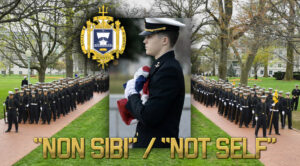
The Navy and its leadership must take a good inward glance at what it holds dear and honors.
It is time to go consider our Core Values (Honor, Courage, and Commitment) and the Sailor’s Creed, remembering that our Sailors and officers support the Constitution and represent the fighting spirit of the Navy.
_
David Stanton is a retired officer from the U.S. Navy Reserve. He holds a doctoral degree and is a graduate with diplomas from both the U.S. Naval War College and the U.S. Joint Forces Staff College.
Related Posts


CONTACT US